Right door for the opening
Door choice depends on clear width and height, available headroom, side room, traffic patterns, and whether the opening is a dock, a drive-in bay, or a secured interior passage.
Describe what your building needs once and we'll connect you with a local Montgomery-area contractor who installs and services commercial overhead doors.
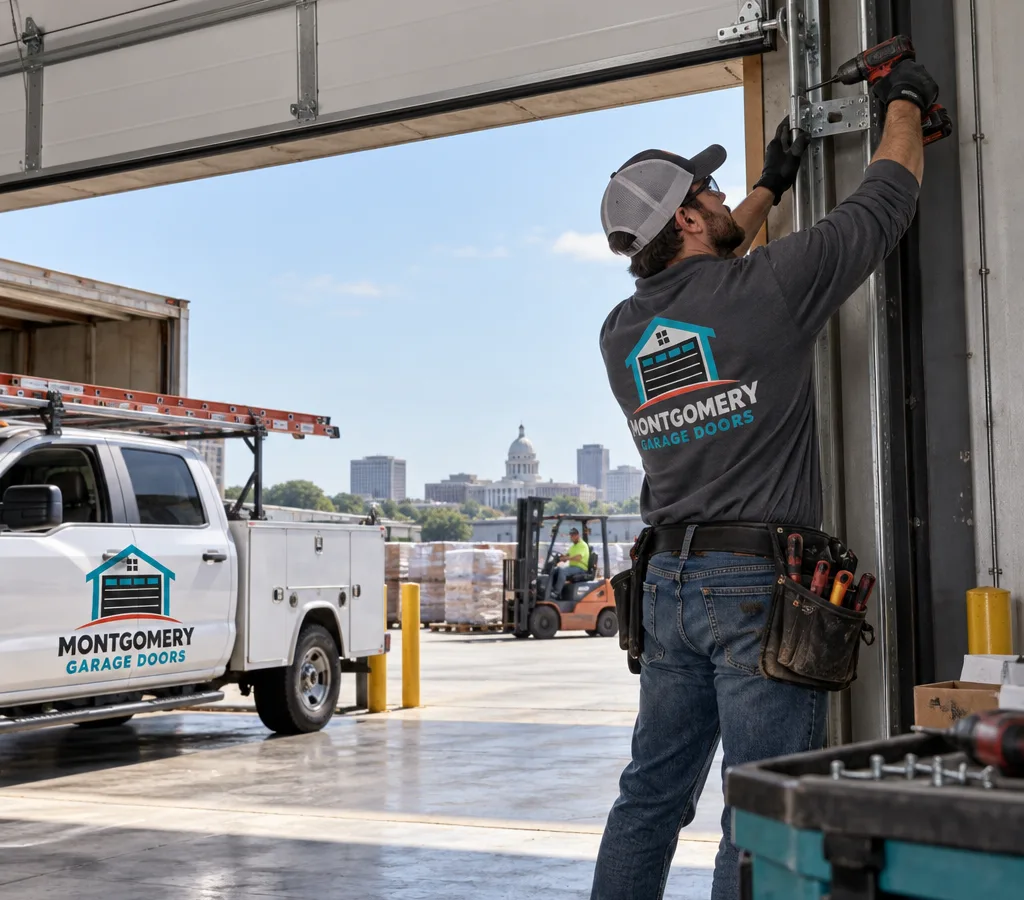
Commercial garage door installation is usually requested for one of two reasons: a new opening needs a door system, or an existing overhead door has aged into frequent breakdowns and the better fix is replacement rather than repeated service calls.
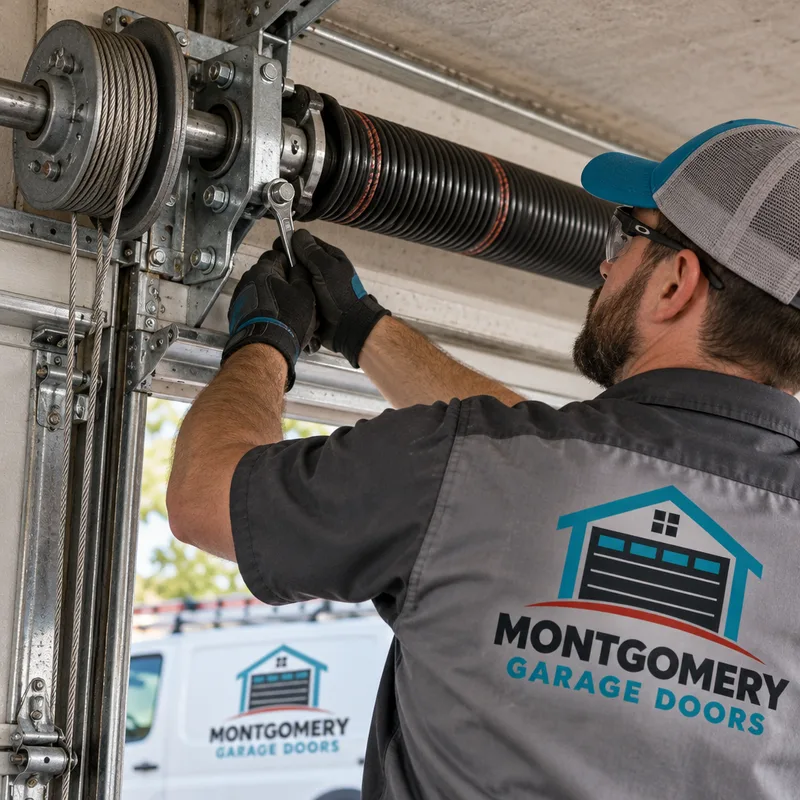
A proper installation is more than hanging a door slab. It includes confirming the opening size, headroom and side room; selecting the right door type; setting tracks and spring system; hanging sections or curtain; wiring or integrating the operator; and testing travel, balance, and safety devices. For many properties, installation and repair overlap because the root problem is a worn-out system. Bent tracks, cracked hinges, stretched cables, and fatigued springs can turn a straightforward warehouse overhead door repair into a full replacement recommendation.
Common commercial door types a contractor may propose after looking at your space:
If you're not sure whether you need installation, replacement, or commercial garage door service, describe the door type, opening size, and what's happening day to day. We connect you with a local contractor who can confirm the best path after an on-site look.
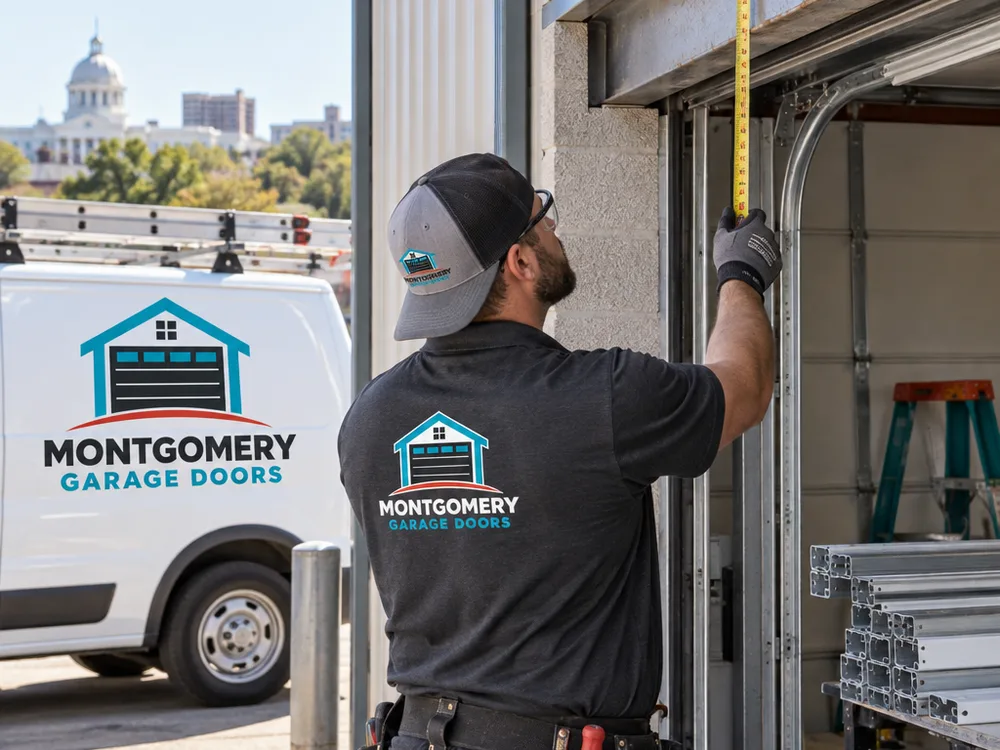
Door choice depends on clear width and height, available headroom, side room, traffic patterns, and whether the opening is a dock, a drive-in bay, or a secured interior passage.
When parts are worn across the whole system, repeated industrial garage door repair can turn into downtime. Replacement is often considered when tracks, springs, and panels have all seen heavy use.
Commercial doors rely on properly set springs, intact lift cables, aligned tracks, and functioning photo eyes or sensing edges when an operator is involved.
A new or existing operator has to match the door type and duty cycle. A contractor can also plan around remotes, keypads, and other access needs.
Heat and humidity can be hard on rollers, bearings, weather seals, and lubrication. Correct materials, sealing, and maintenance intervals matter for long-term performance.
On the phone, describe whether it's a sectional door or a roll up door, approximate opening size, ceiling height, and whether the issue is damage, recurring failures, or a new build-out.
A contractor checks headroom, side room, backroom depth, jamb condition, and mounting surfaces. In older buildings, they also look for impacts that shifted the opening out of square.
The contractor confirms the door model, track configuration, spring type, wind and insulation needs, and operator requirements based on cycle frequency and usage.
If a repair call turns into replacement, the existing door, track, springs, and hardware are taken down and the opening is prepared for the new set.
Tracks and hardware are installed, the door or curtain is hung, springs and cables are set, and the system is tested for smooth travel and balance. Operator limits and safety devices are also checked when involved.
If a bay door is binding, slamming, drifting, or failing to close consistently, describe what you're seeing once and we'll connect you with a local contractor who handles commercial garage doors.
CALL NOW: (334) 223-4436
If the problem is isolated—a bent guide, failed bottom seal, worn bearing, or damaged slat—repair may be the right move. If the curtain repeatedly comes out of track, the barrel or guides are compromised, or impacts have distorted multiple components, a contractor may recommend replacement because the system cannot be adjusted back into reliable operation.
The most helpful details are the door type, approximate opening width and height, whether the door is manual or motor-operated, and what it is doing—stuck open, stuck closed, drifting down, grinding, or coming off track. If there has been a forklift or truck impact, mention which side was hit and whether tracks are visibly bent.
The first check is usually safety and stability: track alignment, roller condition, hinges, bottom fixtures, lift cables, and the spring system. For motorized doors, the contractor also checks operator mounting, limits, and safety devices because rough or reversing travel can involve the operator, door balance, or both.
Sometimes, but it depends on door weight, duty cycle, mounting configuration, and the operator's condition. The contractor can confirm whether reuse makes sense after checking compatibility and the wear level of the operator, rail, sprockets, and controls.
A replacement typically involves securing the area, removing the old door and hardware, installing tracks and the new door system, setting spring tension, and testing balance and full travel. If an operator is included, the contractor finishes by setting limits and verifying safety devices before returning the opening to daily use.
Yes. Montgomery Garage Doors connects callers with local contractors who serve Montgomery and surrounding communities, including industrial corridors and warehouse areas where overhead doors get heavy daily use.
Opener problems can be tied to the door—out-of-balance doors strain operators—or be standalone electrical or mechanical faults. Describe the operator issue on the call, and the contractor can also confirm whether the door itself needs adjustment to prevent repeat failures.
Call and describe the opening, the door type, and what's going wrong. We'll connect you with a local contractor who can handle commercial garage door installation, repairs, or a full replacement based on what the building actually needs.