Door size and track type
A good match starts with the opening size, headroom and side room, and whether the setup uses standard lift or a modified track arrangement.
Describe what's happening once and we'll connect you with a local Montgomery-area contractor who can replace your residential garage door or damaged sections.
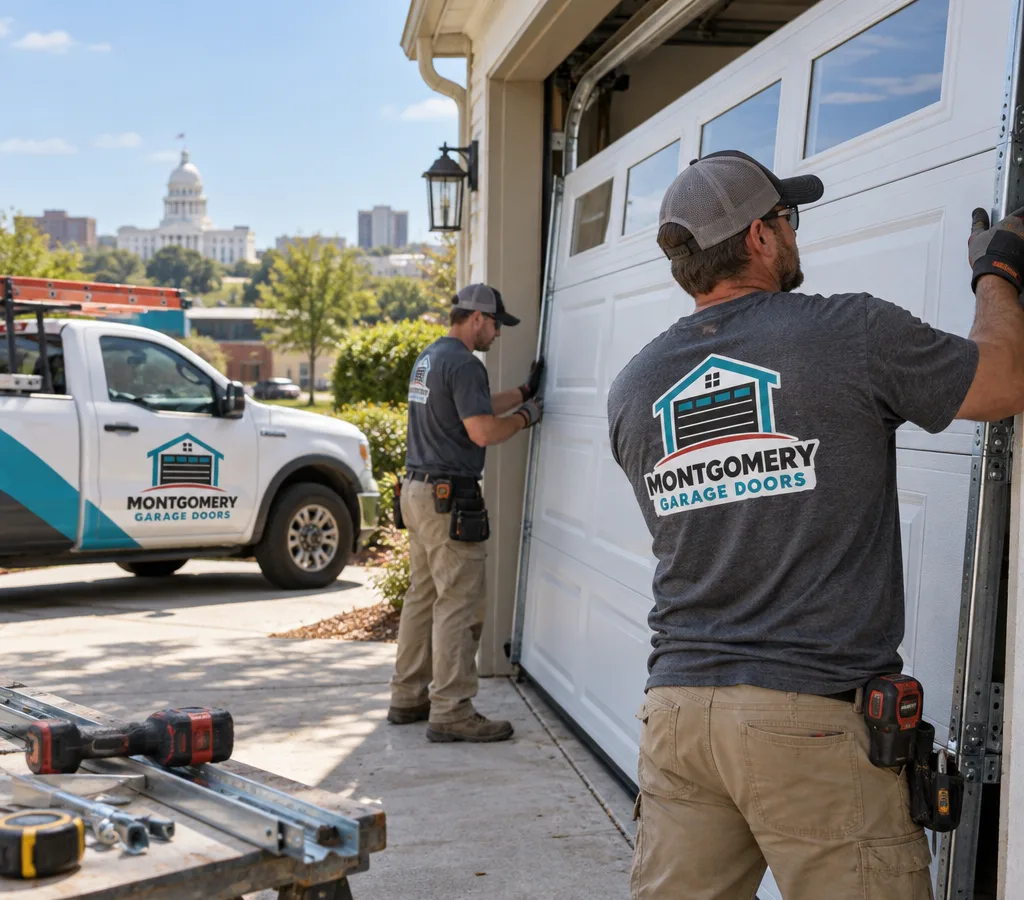
If you're trying to decide whether to replace a garage door entirely or handle a garage door panel replacement, the right answer depends on what failed and what shape the rest of the system is in. The contractor you speak with will usually start by looking at safety, compatibility, and the condition of the tracks, springs, and opener connection points.
Full garage door replacement is commonly the practical choice when:
Garage door panel replacement can work when:
In Montgomery, damaged door calls often come after storms, minor vehicle bumps in a tight driveway, or long-term moisture exposure along the bottom seal. The goal is a door that runs smoothly, seals at the floor, and stays balanced so the opener is not doing the heavy lifting.
If you also have an opener problem—the door won't respond, reverses, or strains—it may be a separate issue. Some homeowners start by getting the door replaced first, then handle the operator side with garage door opener repair.
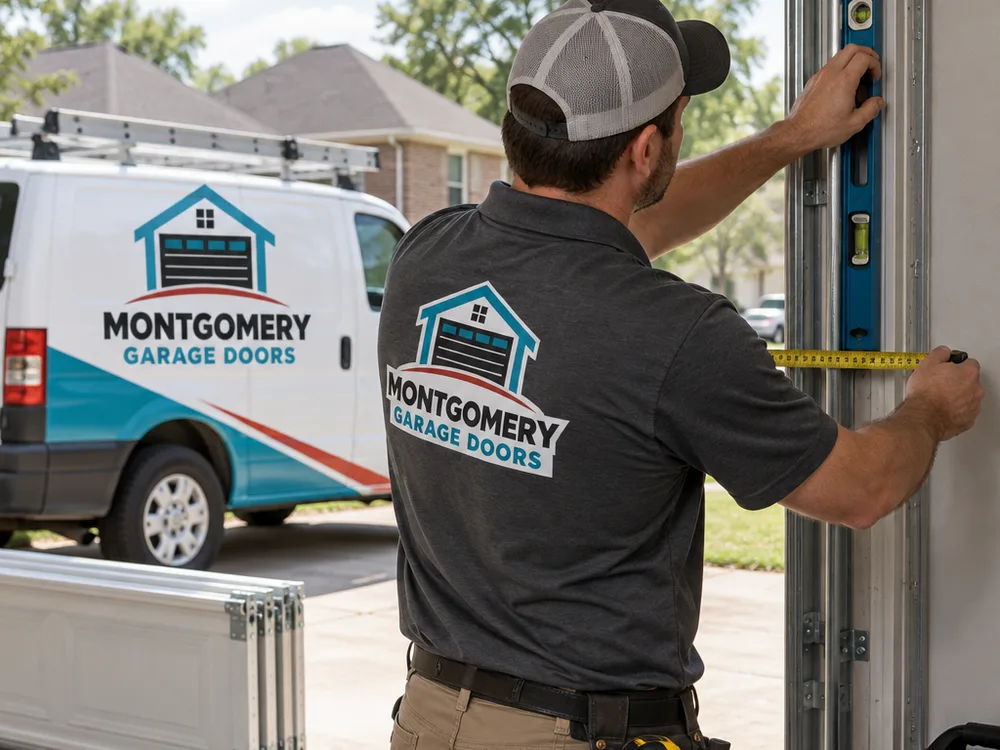
A good match starts with the opening size, headroom and side room, and whether the setup uses standard lift or a modified track arrangement.
Most residential doors use torsion springs on a shaft above the door or extension springs along the tracks. Proper balance matters for safe operation and opener strain.
Replacement garage doors come in single-layer steel, layered steel with backing, and insulated options. The choice affects noise, stiffness, and comfort in the garage.
Heavier doors and taller openings may need added struts, upgraded rollers, or hardware changes to keep the door running true.
A new perimeter seal and bottom seal help with water intrusion during heavy rain and reduce daylight gaps along the jambs.
Share the door size if you know it, the door style, what's damaged, and whether the door is currently stuck open or closed.
We connect you with a Montgomery-area contractor who handles garage door replacement and can discuss options for your opening and hardware.
The contractor typically checks door model compatibility, track condition, spring type, cable routing, and how the door seats against the floor and jambs.
Old sections are taken down, hardware is transferred or replaced as needed, and new sections are stacked, hinged, and set into the tracks. Springs and cables are adjusted for balance.
The contractor runs the door by hand and with the opener, checks travel limits and photo-eye alignment, and confirms smooth movement without binding.
Replacing a garage door involves more than swapping panels. Describe the damage once and we'll connect you with a local contractor who can size it correctly, confirm compatibility, and take it from there.
CALL NOW: (334) 223-4436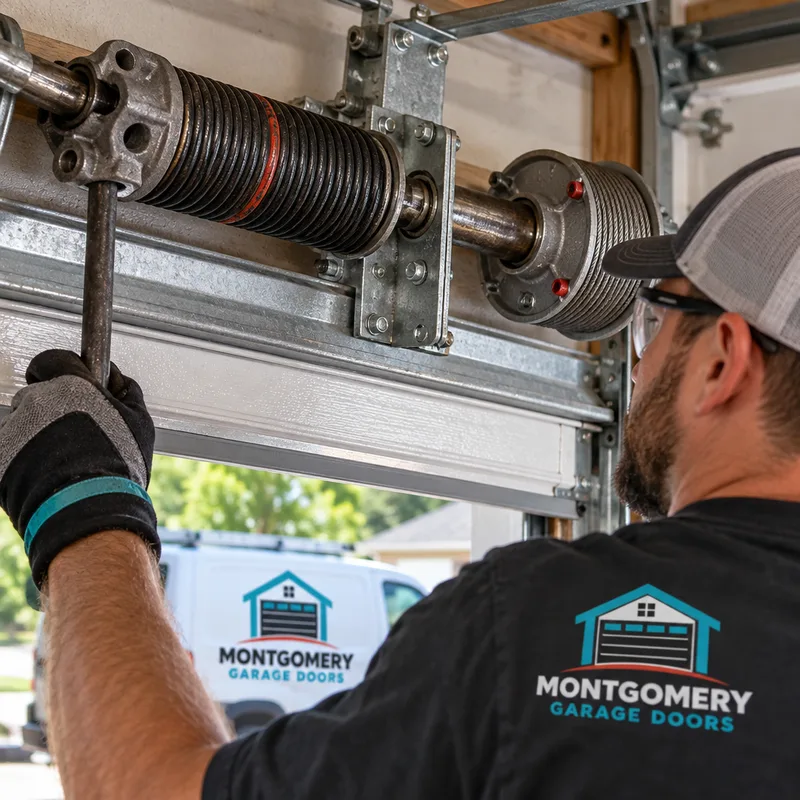
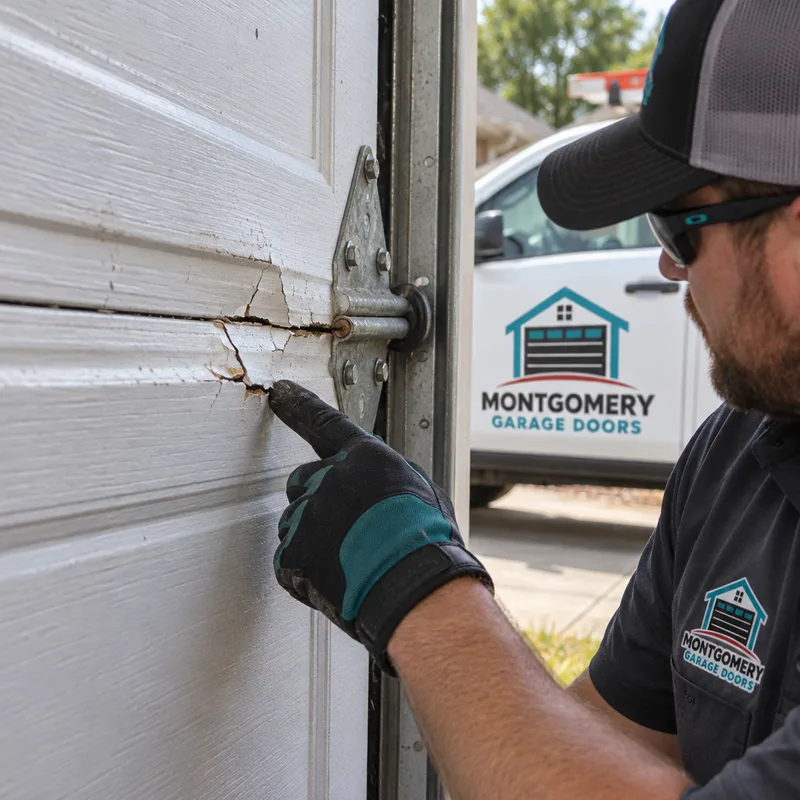
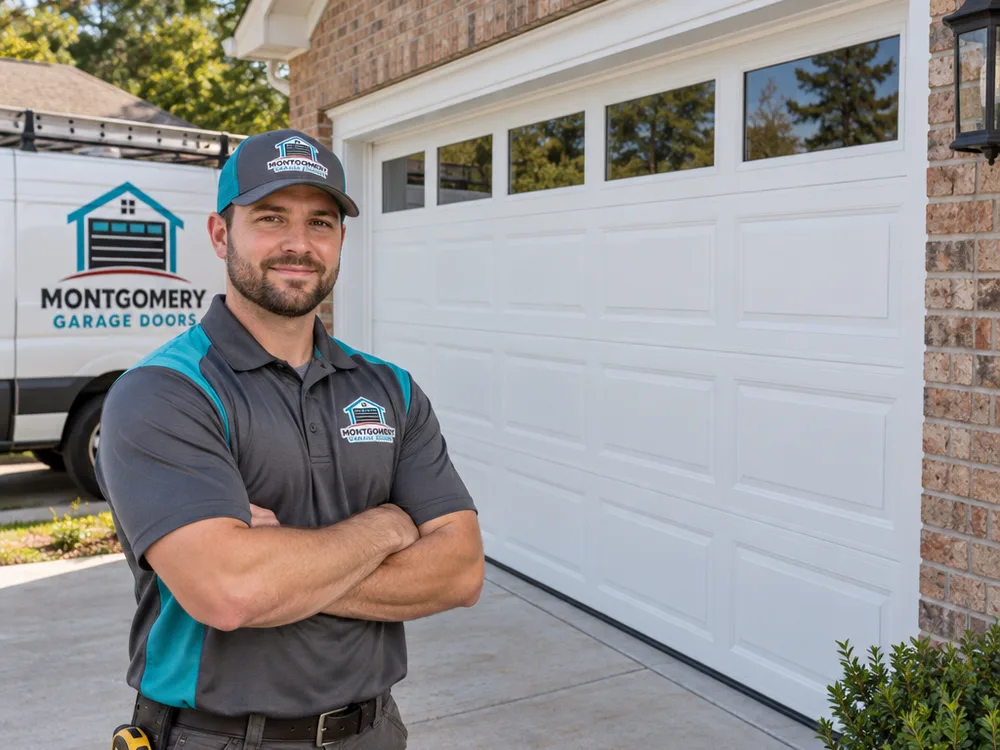
If the door is out of square, binds in the tracks, or has damage across multiple sections, full replacement is often the simpler path. If damage is limited to one section and the exact panel can be matched, a contractor may be able to do a garage door panel replacement without replacing the entire door.
Sometimes, but it depends on track condition and whether the new door is compatible with that track system. Contractors often prefer to match sections, hinges, and track geometry as a set because mixing parts from different series can cause poor travel and premature wear.
Start with whether it's a single or double door, whether it's stuck open or closed, and what kind of damage occurred—impact, storm, or gradual sagging. If you can safely take a photo from inside with the door closed, it helps to capture the track, spring area above the door, and any labels on the door sections.
It can, because door weight, balance, and the connection point for the opener arm matter. After residential garage door replacement, the contractor typically checks opener force and travel limits and confirms the safety reversal system is working as designed.
A contractor usually checks the opening size, headroom, track alignment, spring type—torsion or extension—cable condition, and the condition of the jambs and header where the door seals. They also look for signs of structural twist or a shifted track mount that could make any new door run poorly.
You describe the job once over the phone and we connect you with a local contractor who handles garage door replacement in the Montgomery area. You discuss options and scheduling directly with the contractor and decide whether to move forward.
If you need to replace a garage door in Montgomery, describe the door size, the type of damage, and whether it's currently operating. We'll connect you with a local contractor who can confirm the best approach and walk you through next steps.